
Thirsty work
The truth about AI and its impact on the planet

Often, we are fooled into thinking the future is a singular direction ahead. An inevitable path. This is the promise of progress, and a story AI companies want us to believe. The problem with progress stories is that they blind us, so it becomes hard to know the world without them.
When it comes to the delicate matter of impact, AI treads violently. As technologies go, this one is heavy going. Born in the muscular legacy of capitalism, AI companies want us to internalise one form of progress at the expense of another. This throws up an array of promising contradictions, and as consumers of AI products, we often find ourselves trapped in the middle.
All the problems are all the problems
Framing the impact of AI on the planet is complicated. For this article, I have borrowed from the work of Hlabisa (2025) and used four critical domains which categorise the environmental impact of AI. They are:
Energy
Water
Materials
Land
What follows is a brief exploration into each domain, casting a critical eye on the AI companies that are driving to scale this technology at the expense of digital convenience, and of course, progress.
Energy
Large Language Models (LLMs) require vast amounts of water to train. Global data centre electricity consumption is estimated at around 415 TWh in 2024, roughly 1.5% of global electricity use, having grown at 12% per year over the last five years. About 60% of a data centre's electricity powers the servers themselves. These are AI-optimised hyper-scale facilities that use advanced chips capable of trillions of calculations per second, which require two to four times the wattage of conventional chips.
Cooling systems account for the next largest share, anywhere from 7% at efficient hyper-scalers to over 30% at less efficient facilities. This is where our next critical domain enters the cycle - water.
Water
Data centres generate heat as the TPUs (chips) generate heat, which needs cooling. Water plays a dual role in the AI production chain as it is used for cooling and generating electricity to power the servers.
Cooling
When you put huge amounts of electricity through a heavily concentrated bank of servers, the heat is intense. If left, it would literally melt the silicon. To counter this, massive evaporative cooling systems are used to moderate the temperature of the servers and keep them optimal. In this setting, water is either consumptive (removed from the source but never returned) or non-consumptive (used to generate the electricity that powers the data centres). This matters too, as in both scenarios, water is not returned to its source, which leads to scarcity, and in some places, worsens droughts.
The science is worth sharing here. When water evaporates, it goes through a phase change from liquid to gas. This process absorbs heat. Data centres pump hot air from the servers (cooling) and spray freshwater onto the source of the heat (servers again) via cooling towers. Water evaporates, pulls heat away and escapes into the atmosphere. The average data centre consumes 7,000 to 12,000 litres of water for every hour of use, and they stay open 24 hours a day, 365 days a year. This is a problem as the servers are thirsty and consume vast amounts of water from local freshwater sources. But the story doesn’t end there. We also need to consider water use in the production of the chips in the first instance.
The physics of computing dictates that only ultra-pure water can be used when producing chips. Transistors are manufactured at the nanometre scale, and even microscopic impurities would disrupt the fabrication process and damage the circuits. No dust or minerals can touch the surface of the transistors. Through reverse osmosis, deionisation and UV Light, every strip of water impurity is stripped until water is reduced to its bare H20 molecules. This is a battle as water doesn’t like to be pure, as it becomes a solvent and wants to absorb minerals.
Materials
When we talk about AI, the conversation usually focuses on software, algorithms, and data. But AI is ultimately physical. Behind every model and every prompt sits a vast global infrastructure built from minerals, metals, and rare earth elements extracted from the planet. This extraction is to meet demand. This is best described by Jevons ’ Paradox, where efficiency improvements ultimately lead to greater overall resource consumption. Jevon, an Economist from the 1800’s, noticed that when Steam Engine efficiency increased, coal consumption increased as more people travelled, more often. And the cost is reduced. The same ‘paradox’ applies to technologies, and specifically LLMs. In the modern day, this leads to what Hlabisa (2025) calls Anthropic Escalation.
To understand the tension here, it helps to focus on the AI supply chain. Minerals used to create the physical compute components are mined in Africa. The chips are fabricated in China. The LLMs (models) are trained in the USA, moderated for abusive and dangerous content in Rwanda, and then sold for consumption globally. This infrastructure is globally distributed, yet the impacts are heavily localised and native to the people who occupy that geographical location. These processes are often invisible to the consumer and are well hidden by the companies that commission them. AI infrastructure also depends on several critical minerals, including: Gallium, Germanium, Indium, Cobalt, Lithium and Tantalum.
Many are mined in geographically concentrated regions. For example:
Cobalt production is heavily concentrated in the Democratic Republic of Congo.
Rare earth processing is dominated by China.
Advanced semiconductor fabrication is largely carried out in Taiwan and South Korea.
This concentration introduces both environmental pressure and geopolitical vulnerability. The global AI ecosystem depends on a supply chain that stretches from mining sites to land to house data centres, which brings us to our final critical domain - land.
Note about GPUs and TPUS: At the heart of every data centre is a hierarchy of specialised silicon. The workhorse of AI training is the GPU (Graphics Processing Unit). Alongside GPUs sit CPUs (Central Processing Units), which manage the flow of instructions and data to the GPUs.
Land
The modern data centres have a footprint of 30-100 hectares. That’s the equivalent of 56 to 187 football pitches. It’s vast. If you add the concrete foundations, the physical data servers, the structures and electrical sub-stations, it’s easy to see why residents are rising up against data centres being built in their towns and open green spaces. This conversion from green spaces, or wasteland, to industrial zones is creating new problems, such as chemical pollution, habitat loss and water scarcity. As AI models scale and the race for AGI (Artificial General Intelligence) accelerates, so do the land grab tactics. Ireland and Singapore are ground zero in this race to acquire land. Data centres in these locations are crashing the local grids, leading to blackouts and energy loss. This compounds an already fragile problem.
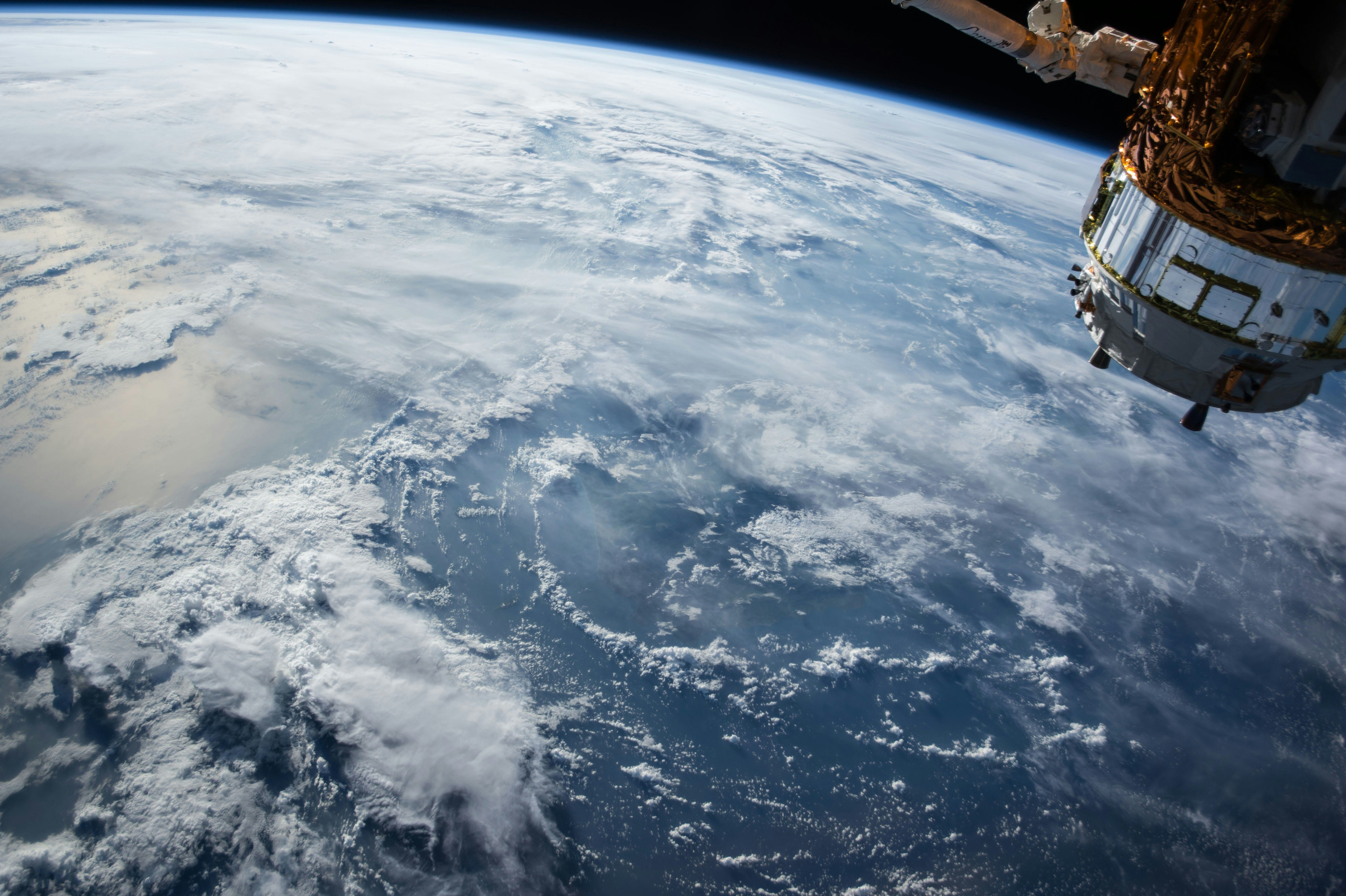
Inventive entrepreneurs are looking to the deserts of Dubai and space as a solution. Dubai offers vast land, cheap labour costs, and an abundance of solar energy, maybe too much. Solar panels overheat under intense radiation, so strong sunlight means large amounts of energy hitting the panel. As the panel temperature rises, electrical resistance increases, voltage drops and efficiency decreases. So it’s not the ideal solution. Housing a data centre in space is sometimes proposed as a future idea because space offers a few physical advantages for computing infrastructure. If you are Elon, and happen to own a rocket company, have an AI model and satellites - this could be an attractive, rent-free solution. Putting computing infrastructure in orbit would avoid land use, zoning conflicts and water consumption for cooling, as Space is extremely cold (around –270°C background temperature), so heat can be removed through radiative cooling.
Future solutions
As AI systems scale and the race to AGI heightens, the demand for critical resources will only increase. Criticality must become the central dialogue for how we progress in a future that seems to be mapped out for us. Yet critique, however necessary, is not enough on its own. Paulo Freire called critical hope: the refusal to accept that what exists is all that is possible. If AI treads violently, the question becomes who bears that weight, where, and whether those of us who benefit from it are willing to look.
One solution that holds promise is follow-the-wind computing. This process dynamically shifts workloads to wherever wind energy is currently available, with related strategies like co-locating data centres directly with offshore turbines, and using curtailed or ‘stranded’ renewable energy that grids can't absorb. It would make compute cheaper and greener in ways that could cope with demand (remember Jevons' Paradox). The geography of wind resources favours the Global North, shifting the burden on the Global South. Maybe the future of data centres is not deserts and space, but oceans and the vast open spaces.
Critical hope demands something harder than technical innovation. It asks us to recognise that the future is not, as AI companies insist, a singular path ahead. It is contested terrain. The question of who bears the weight of progress, and who gets to define what progress means, is not a technical question; it’s a political one. And it will not be answered by where we put our data centres. It will be answered by whether we are willing to look at who is paying for them.
References
Hlabisa, S. (2025) ‘The ecology of artificial intelligence: energy, water, materials, and land limits of digital systems’, Carbon Neutral Systems, 1, p. 19. Available at: https://doi.org/10.1007/s44438-025-00018-8 (Accessed: 12 March 2026).
Freire, P. (1994). Pedagogy of Hope: Reliving Pedagogy of the Oppressed. New York: Continuum.